
The government of Pakistan's Punjab province has justified its allocation of over Rs 61 million to the largest centre of the Jamaat-ud-Dawah, saying the funds are needed to continue the services being provided to people by the facility.
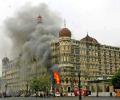
Lawyer Ujjwal Nikam says that while justice has been delivered to some victims of the 26/11 Mumbai terror attacks, their conspirators are still hiding in Pakistan. He criticizes Pakistan's handling of the trials of those arrested and calls for action against masterminds like Hafiz Saeed and Zakiur Rehman Lakhvi.

Until Pakistan hands over Lashkar-e-Tayiba founder Hafiz Saeed to India bitterness in ties between the two countries cannot end, Bharatiya Janata Party said on Saturday.

In a major counter-terror operation spanning three states, the Delhi Police has dismantled a Lashkar-e-Taiba (LeT) module comprising eight operatives, including seven Bangladeshi nationals who had illegally entered India and procured forged identity documents, an official said on Sunday.

Hitting back, Congress spokesperson Supriya Shrinate posted a picture of Afridi with BJP leader Anurag Thakur to say that the ruling party should be ashamed for asking questions from the Congress while it itself maintain ties with them.
The Bharatiya Janata Party on Monday said a Pakistan court order quashing cases against Mumbai terror attack mastermind and Jamaat-ud-Dawa chief Hafiz Saeed was a "big setback" to India's efforts to bring him to justice and "proof" that Pakistan does not want to act against those behind the attack.
Pakistan will take action against Laskhar-e-Tayiba founder Hafiz Saeed, the mastermind of the Mumbai attacks, if India provides evidence against him that stands in court, Foreign Minister Hina Rabbani Khar said on Saturday.

Hafiz Saeed's counsel said the "controversial" movie contains "malicious and filthy" propaganda against the Jamaat-ud-Dawa in general and Hafiz Saeed in particular.

A United Nations Security Council panel has issued a 'revised' letter removing the term 'sahib' from the name of Mumbai terror attack mastermind and JuD chief Hafiz Saeed, saying it regrets the mistake after India objected to the use of the salutation.
In trying to portray a globally sanctioned terrorist as a 'common man', Pakistan was exposed when its top official publically outed crucial details about Hafiz Abdul Rauf, including his national identity number which matched details in the database of the United States sanction list of terrorists.
Jamaat-ud-Dawah founder Hafiz Muhammad Saeed has in an interview with a Pakistani news channel said that India has always maintained double standards when it came to relationship with Pakistan. Tahir Ali reports
Congressman Ed Royce, an influential Republican lawmaker, has slammed Pakistan for not shutting down the Deobandi schools that indoctrinate and brainwash people to engage in jihad.
India has said that it is disappointed with the verdict passed by the Pakistan Supreme Court on 26/11 mastermind Hafiz Saeed.
Pakistan has said it cannot arrest outlawed Jamaat-ud-Dawah chief Hafiz Mohammad Saeed, linked by India to the Mumbai terror attacks, since there is no proof of his involvement in the 26/11 assault.
Congress on Wednesday accused the government of a "massive cover-up" on the issue of journalist Ved Prakash Vaidik meeting terror mastermind Hafiz Saeed in Pakistan.
Hafeez Saeed claimed the presidency, prime minister's house, governor's house and chief minister's house in all provinces and ministers' enclaves should be declared a violation of the Islamic principle of social and economic justice
External affairs Minister SM Krishna has taken on Lashkar-e-Tayiba founder and Jama'at-Ud-Dawa chief Hafiz Saeed saying India believes Saeed is the "brain" behind the Mumbai attacks of November 2008, telling Pakistan's government that if it wants to prove its seriousness on tackling terror, it must tackle Saeed.
Facing attacks from all corners, the government on Tuesday disapproved of and condemned the meeting that a journalist had with 26/11 mastermind Hafiz Saeed and said it has sought a report from the Indian High Commission in Islamabad about whether they were aware of this.
India expressed surprise on Pakistan's statement on Mumbai blasts mastermind and Jamaat-ud-Dawah chief Hafiz Saeed.
Pakistan must question Hafiz Saeed, prime suspect in the Mumbai terror attacks, and even "half a step is a good step", Home Minister P Chidambaram said on Friday while regretting that no trial has been started against the perpetrators in that country in the last 10 months.
The Pakistani police on Wednesday said they were awaiting instructions from the government for taking further action against founder of Lashkar-e-Tayiba and Jamaat-ud-Dawa chief Hafiz Saeed, who was placed under house arrest after two cases were registered against him under an anti-terror law.

The Lashkar-e-Tayiba, expert Stephen Tankel believes, is capable of operating on a large scale and some of its operatives have suggested that the organisation benefited in terms of recruitment following the 26/11 attacks in Mumbai.

Pakistan President Asif Ali Zardari does not believe that India's demand to take action against Jamaat-ud-Dawa chief Hafiz Mohammad Saeed, the mastermind of the terror attacks on Mumbai, is a 'major hurdle' and was hopeful that relations would be normalised soon between the two neighbours."I don't think the issue of Hafiz Saeed is a major hurdle in the normalisation of our relations. I am hopeful that ties between the two countries will be restored very soon," Zardari said.
Asserting that Pakistan should be given a 'categorical response', Samajwadi Party chief Mulayam Singh said Saeed's release posed a 'grave threat to India's security'.
The Pakistan government honours the Supreme Court's decision upholding the release from house arrest of Jamaat-ud-Dawah chief Hafiz Saeed and Indian authorities should accord 'similar respect to the verdicts of Pakistani courts,' Interior Minister Rehman Malik said on Tuesday.
India on Saturday said there was "enough evidence" to continue investigation against Jamaat-ud Dawah chief Hafiz Saeed in connection with the Mumbai attacks even as it finalised response to the latest set of questions sent by Pakistan.
Arrested Pakistani national Mohammad Omar Madni is a top aide of Jamaat-ud-Dawa chief Hafiz Mohd Saeed, a prime accused in the terror attack on Mumbai. "He is a close aide of Hafiz Saeed and has been operating from Nepal for the past one year," a senior Delhi police official said. Madni has been a close aide of Saeed since 2000 and was involved in recruiting cadres for the Lashkar-e-Tayiba outfit, he said.

Union minister Kiren Rijiju said Pakistan should file a chargesheet against Saeed.
India is expected to convey its unhappiness over Pakistan's equivocation on Jamaat-ud Dawa chief Hafiz Saeed to US Under Secretary of State William Burns, who arrived in New Delhi on a two-day visit.
A Pakistani court on Friday directed Jamaat-ud-Dawah chief Hafiz Saeed to establish his case that the government should defend him in a US lawsuit filed by relatives of Jewish victims of the 2008 Mumbai attacks.
Pakistan on Friday rejected External Affairs Minister S M Krishna's remarks that India has provided adequate proof linking Hafiz Saeed to the Mumbai attacks, saying action could be taken against the Laskar-e-Tayyiba founder only on the basis of "solid evidence".
India on Thursday rubbished Pakistan's contention that it was not provided sufficient evidence about involvement of Jamaat-ud Dawa chief Hafiz Saeed in Mumbai attacks, even as it is seeking details about Islamabad's claim about banning outfits like JuD and Jaish-e-Mohammad.
Pakistan's promise to contain its activities has simply failed to affect the LeT at all as the group's activities have intensified, observes Amir Mir

Pakistan should review its stand on India as its "restrained" policy is being taken as "weakness", believes Jamaat-ud-Dawa chief Hafiz Saeed.
Prime Minister Yousuf Raza Gilani acknowledged that the case of Jamaat-ud-Dawa chief Hafiz Saeed was an "issue" between Pakistan and India but said Islamabad needs "substantial" evidence against him to try him in a court of law.
Calling Pakistan's bluff, India on Monday said Jamaat-ud-Dawa chief Hafiz Saeed had never been arrested in connection with Mumbai terror attacks even though its Interior Minister Rehman Malik claimed so.
India on Monday reacted strongly to the Lahore High Court's order to dispose of the anti-terror case against Jamaat-ud-Dawa chief Hafiz Saeed, the alleged mastermind behind the November 26, 2008 Mumbai terror attacks.
Lashkar-e-Tayiba founder Hafiz Saeed has moved the high court in Lahore, asking it to stop Pakistani authorities from taking any "adverse action" against him under pressure from the United States and provide security to him as his life was "not safe" and any "mishap" could happen.
A Pakistani court on Tuesday asked the federal government to respond by March 29 to a petition filed by Hafiz Saeed, the chief of the Lashkar-e-Tayiba-linked Jamat ud Dawa, seeking legal aid to defend him in a lawsuit filed in a United States court by relatives of two Jewish victims of the 26/11 Mumbai attacks.
The government has given its sanction to charge sheet nine people including Pakistani-American terrorist David Headley, Lashkar-e-Tayiba founder Hafiz Saeed and two Inter Services Intelligence officers for plotting terror attacks in India including the 26/11 strikes.
